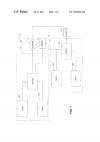
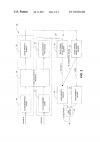
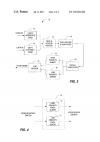
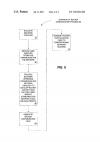
Automated methods and systems for determining and setting router QoS adjustments to control the service level of VoIP voice communications in a packet switching network supporting both voice and data communications. Network topology and service level requirements are processed to determine QoS settings for each of the routers. The QoS settings are transmitted to the routers, for example in the form of a router configuration file, to set the QoS adjustments to achieve the desired VoIP service level. The invention is applicable to packet switching networks comprising routers or equivalent electronic switches providing electronically adjustable QoS settings.
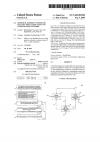
A state-based admission control method for networks carrying inelastic applications traffic such as exemplary VoIP traffic. The method analyzes the history of real-time VoIP activities in a network to determine a corresponding control state and applies performance measurement techniques to form the admit/reject decisions for placed VoIP calls.
Device-wide performance guarantees may be implemented in a network element using a pull forwarding scheme by using separate processes on the network element communicating via handshake signals to enable coordination between the aspects of the network element. One class of processes execute at the ingress queues, a second class of process execut at junction points, and a final class of processes execute at the egress ports. The combination of these separate processes leads to the correct scheduling of frames in a device-wide manner as if there were a centralized scheduler with complete information about all queued frames. As a result, the performance guarantees of the intended scheduling algorithm are preserved and are provided in a device-wide manner. The scheduling algorithms that are supported include round-robin, deficit round robin, negative deficit round robin, weighted round robin, and strict priority.
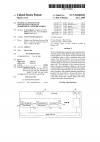
A frame relay data rate R.sub.FR for a VoIP call is determined based on a particular packetization time interval T.sub.S and its associated sample data size B.sub.S for a particular CODEC, a size B.sub.HT of at least one of a frame relay header and a frame relay trailer, and a size B.sub.IP of an IP header. A number of VoIP calls NUM.sub.VOIP that can be supported by a frame relay access link is determined based on a bandwidth of the frame relay access link that is to be allocated to VoIP traffic, and the frame relay data rate R.sub.FR. At least one network parameter is determined based on NUM.sub.VOIP. Bandwidth in an asynchronous transfer mode (ATM) network is allocated for the VoIP traffic based on the at least one network parameter.